Cudrania tricuspidata ´Hwanggeumja 3´ - cudrang, che /Tree expedition August 2026
Price
48 €with VAT
42,86 € without VAT
Availability:
Skladem
Weight:
2 kg
- Description
- Enquiry
- A high-yielding female Che variety from South Korea that produces high-quality, exceptionally sweet fruit. In Korea, it is known as “Sweet Berry” and is considered the sweetest Korean Che variety. The tree is easy to grow, drought-tolerant, and undemanding in terms of soil. This top-quality variety is suitable for commercial cultivation.
- Origin: Its Korean name is “황금자 3호.” The variety was bred in 2012 by Shinjin Horticulture Seed Co., Ltd.
- Growth: moderate. The tree initially grows upward, but over time it bends toward the ground in an arch, which facilitates harvesting. Young shoots have small thorns that disappear with age. Growth can be controlled by pruning. Che trees are grafted onto Osage Orange (Maclura pomifera) rootstock.
- Site requirements: full sun. It thrives in various soil types as long as the roots remain consistently moist in summer.
- Flower: monoecious, female. A pollinator, a male Che plant, is required for fruit production.
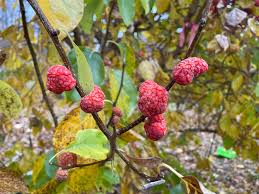
- Fruit: perfectly round, medium-sized, uniform, and with a very good surface texture. Ripe fruits are juicy with dark red flesh. Che fruits are not berries, but individual drupes similar to raspberries, resembling mulberries in appearance. Ripe fruits have a short shelf life and last only a few weeks in the refrigerator. Therefore, they must be consumed or processed as soon as possible after harvest. Ripe fruits are eaten fresh; they are sweet and juicy. Fresh fruits can be pressed for juice or processed into various beverages, jams, or savory sauces.
- Taste: very sweet; it is the sweetest Korean che variety. Ripe fruits taste like melon and papaya.
- Harvest: Harvest begins in late October to early November. The fruits ripen gradually. The later the fruits are harvested, the higher their sugar content. They are ripe when they separate easily from the stem and no milky sap oozes out after harvest. Prematurely harvested fruits will not ripen further.
- Yield: high. The fruits grow very densely on the branches. Yield is high and consistent if a pollinator is available. The variety bears fruit as early as the first year after planting.
- Disease resistance: resistant to diseases and pests, suitable for organic or pesticide-free cultivation.
- Frost resistance: frost-hardy throughout Central Europe.